Showing posts with label solar electric. Show all posts

157,000 Electric Miles Later: We Are Indeed Getting There


Me & my MINI-E in 2009, my ActiveE in 2012 and my i3 in 2014. Five and a half years and over 157,000 electric miles (252,000 km), mostly powered by solar-generated electricity.

It's been a little over five years since my electric journey began. I couldn't have possibly imagined where this was going back in 2009 when I was accepted in to the MINI-E trial lease program. I knew I was interested in alternative fuel vehicles, and I knew I wanted to reduce my personal consumption of oil, but I really had no idea if I'd like driving electric or if the industry would actually be making and selling electric cars anytime soon.

Sure there were rumors that GM was going to make a plug in car that they were calling the Volt, there was a small start-up car company in California called Tesla selling an electric Lotus conversion for $105,000 and there were also a few new companies like Aptera and Phoenix Motorcars trying to bring electric cars to market, but nothing really seemed certain, and everything seemed many years away. So when I came across the online application to drive an electric MINI Cooper for a year in a small test program for BMW, I jumped at the opportunity and applied. It's now about 66 months since I took delivery of my MINI-E and between that car (73,000 mi) my ActiveE (70,000 mi) and now my i3 (14,000 mi). I've driven over 157,000 electric miles.


I admit I'm impatient and frequently wonder why it's taking "so long" for mass electric vehicle adoption. I wonder why there aren't more EVs from more manufacturers with a wider array of range options and utility. The driving experience of electric cars is simply so much better than that of an internal combustion engine car. In fact, most everybody who buys an electric car seems to agree that they want to continue driving electric from then on, and they don't ever want to go back to the ICE. However, every now and then I'll reflect on the past five years that I've been driving electric and I realize just how far we have come in that time. As I mentioned, back in 2009 the electric options were a $105,000 sports car from an unknown start-up electric car company (Tesla), apply for the MINI-E test program or build your own electric conversion. Today there are about 20 plug in cars available! Granted not all are available in every market in the US, but every couple of months or so a new plug in is introduced. So in reality plug in cars are indeed advancing pretty quickly, even if EV supporters like myself want more plug in options now.

We have indeed come a long way in a relatively short period of time. The automobile industry historically moves slowly and this shift to electrics is happening at a pretty fast pace as far as the OEMs are concerned. The typical gestation period for a totally new car is typically about five to six years, so by industry standards the plug-in revolution is indeed happening rather quickly. In 2009 and 2010 less than 2,000 plug in electric vehicles were sold in the US each year, respectively. In 2011 that number jumped up to about 17,000. In 2012 it more than doubled to over 52,000 and in 2013 there were over 97,000 US plug in sales. This year we are on a pace to sell about 120,000 plug in electric cars. That's nearly 300,000 cars with plugs sold in the US since I first started driving electric back in 2009. I know 300,000 is a very small number compared to the overall amount of vehicles sold in the US during that time, but the number keeps growing every year and with new models being introduced all of the time that trend will likely continue.


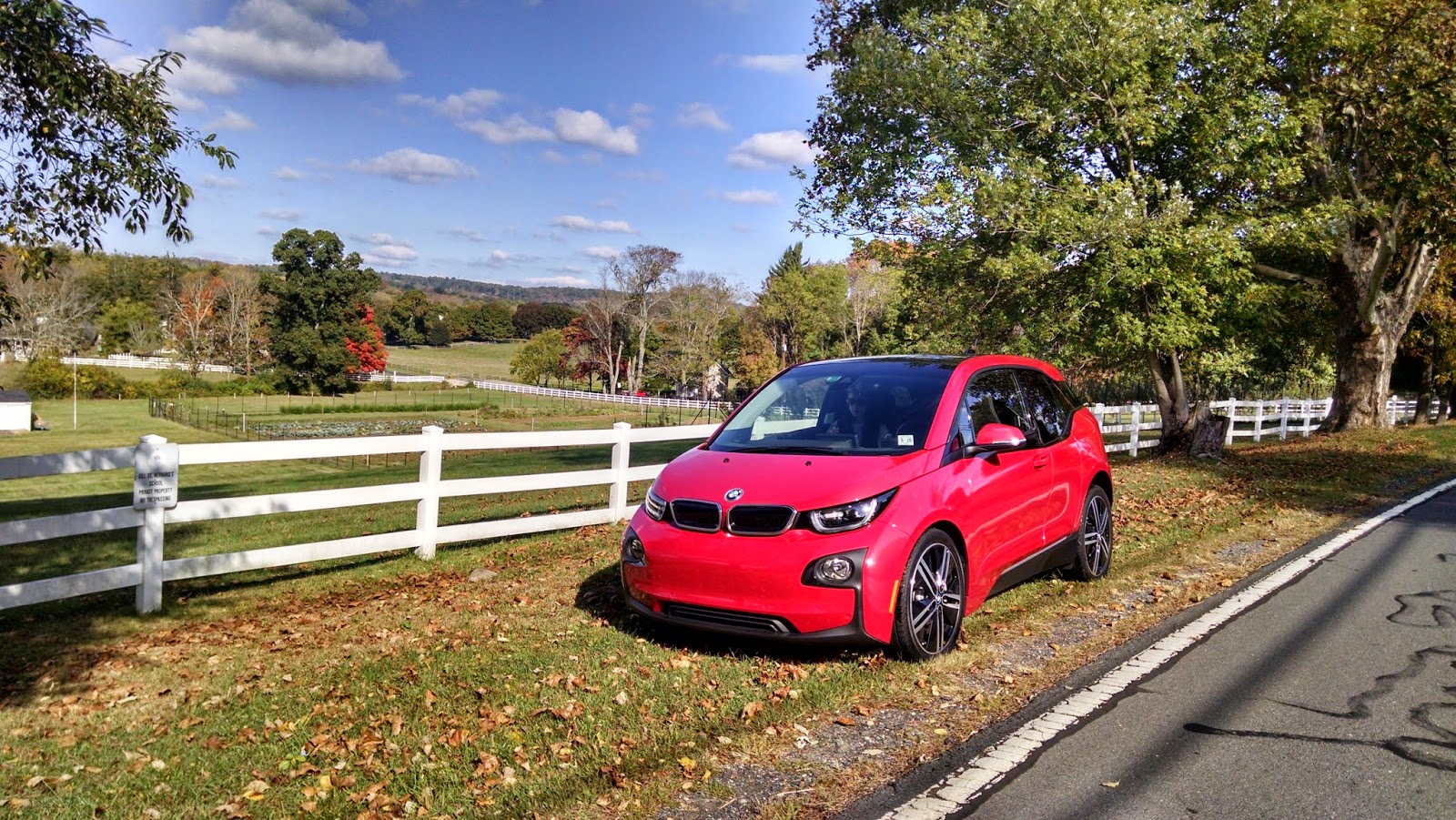


I'm more convinced than ever that plug in electric vehicles are here to stay, and that mass adoption is only a few short years away. Battery electric vehicles offer a better driving experience. They are quieter, they drive smoother, they have much less maintenance and the fuel costs much less. They are cleaner and when powered by renewable energy are completely emission free. The electricity supply is getting cleaner every year as more and more renewables are introduced and the old, outdated and worst polluting powerplants are decommissioned. The supply chain of gasoline is going in the opposite direction as it takes more and more energy to find and extract oil so gas is actually getting dirtier and more polluting all the time, even as gas cars become more energy efficient. There are so many reasons why battery electric vehicles are the future it's easy to realize that we'll get passed the challenges faced today as this disruptive technology is being impeded and questioned by the entrenched industry.


The one thing I keep circling back to when people ask whether or not electric vehicles will have staying power or if they are only passing fad is the owner loyalty. The vast majority of electric vehicle owners love their cars and vow to never go back to gas. People love driving electric because it's better. That's the real reason EVs are here to stay. It isn't the governmental incentives, the fact that they are cleaner, or are cheaper to operate. The real reason EVs will win in the long run is that they offer a better driving experience. People love driving them, it's really that simple. The high cost of batteries, the need for a robust fast charge infrastructure and the inertia of the status quo are all just temporary obstacles that will be solved in the coming years.


When I first got my MINI-E, my daily driver was a Toyota Tacoma pick up which I still own. I now only use it to plow my driveway and the parking lot of my restaurant and whenever I need to haul something large. I  only drive it about 1,000 miles a year. The Tacoma averages about 18 miles per gallon so let's say I never went down the electric path and simply kept driving my Tacoma this whole time. Here's a little taste of what I would have had to do:

* I would have needed to buy about 8,600 gallons of gasoline, which would have cost approximately $30,000. The electricity to power my EVs during that period cost about $8,000 if I were paying market rate. However since I mostly charge from my home solar array and have a surplus many months I figure the real out of pocket cost for me was somewhere around $2,000.

* I would have had to have done about 30 oil changes that would have cost about $1,500 and 165 quarts of oil would have needed to be recycled. There would have also been plenty of belts, filters, plugs and other normal wear items on the internal combustion engine that would have needed to be replaced.

* I would have had to stop for gas about 500 times and wasted 60 hours of my life just waiting at a gas station for my tank to fill - and they say plugging in is inconvenient!   

*I would have released at least 100,000 lbs of CO2 into our atmosphere. According to the EPA burning one gallon of gasoline releases 19.64 lbs of CO2. If all of the electricity I used to charge my car came from my solar array then I would have save over 160,000 lbs of CO2, but since I do charge at my restaurant and at some public charging stations I realize it's not possible to offer a perfectly accurate estimate. However I'm certain more than 66% of my energy comes from my solar array. 
The future looks bright indeed. I'm ready for the next 157,000 electric miles!
I'd like to thank the followers of this blog and my previous EV blogs. It's been such a great ride so far, and the support I've gotten from the people here has definitely enriched the experience. Together we really are making a difference!

The Norby's "Driving to Net Zero Energy Challenge" Starts off Strong!

My i3 is powered by electricity generated by my home solar array. EV+PV is really a fantastic combination and one that I believe will be fairly common in the near future.  So how can you possibly top that? How about by getting two i3s and powering both of them plus your entire household's energy use by your  solar array! That's exactly what the Norby's are attempting to do.
I have frequently written on my blogs how one of the best part of being in BMW's e-mobility test program for the past five years has been meeting and interacting with many of the other people in the program. Together we learned how to live with the issues that test cars frequently have, we built up our own support network and we simultaneously realized how fantastic driving electric was. It was a really a great experience and one that was nothing short of life changing for many of us. 

While I've literally made hundreds of acquaintances in the program, there are a few people who I've really connected with and now consider friends, and one of them is Peder Norby. Peder and his wife Julie live in Carlsbad, California and went from MINI-E to ActiveE to BMW i3, just like I did, only they went one step further and got two i3s! Like me, the Norby's power their electric cars with clean energy from their rooftop solar array. However even though our systems are about the same size, their array provides about 1/3 more energy than mine does because of the location (sunny Southern California) and orientation of the arrays. 

This year, Peder and Julie began a year-long net-zero energy challenge. They are attempting to live the entire year with their solar array providing all the energy they need to power their home and both of their cars. I believe this is a fantastic story and a glimpse into what the future has in store. Peder has been updating the progress on his i3 blog but now that he is one quarter of the way through the year, I asked him for permission to post his progress here and he happily agreed.  Below is a little introduction to what the Norby's are doing followed by the three month update. 

It’s hard to get this down to a sentence or two, but when we built our home in 2005,  our ethos was to partner with nature, harvesting the gifts of nature, building the most efficient home possible.

In doing this, we wanted to elevate, we refused to compromise or lower the enjoyment of our life and the caliber of our dwelling, we refused to reduce our life to living in a small cave with one solitary light bulb, solely for the sake of efficiency.

Our desire was to express ourselves artistically, with the highest quality materials, design and comfort in the size home needed to accommodate our family and friends, while partnering with nature, being as efficient as possible. We wanted to live in a net zero energy home, harvesting food and drink from our land. Not big or small, not right or wrong,  just our home.

The idea is a simple one: Harvest sunshine from the roof of your home to provide 100% of the power needed for your home and the two cars in the garage. That is our goal in this "Driving to Net Zero Challenge.
 
The 12 month documented journey began May 15, 2014. Three months in, things are looking pretty good:

Update Month Three. We're killing it!

The idea is a simple one, harvest endless sunshine from a small portion of a roof to provide 100% of the energy needed to power a home and two cars with zero utility cost, and zero gasoline cost.

Summary:
  • 1/4 of the way through the year,  -167 kWh and a $468 credit.
  • Stats, Stats, Graphs, Graphs. 
  • We're killing it! Ready to make a projection!
  • Our French import.
We estimate that we will be -$800 by Oct/Nov
Solar PV production holding steady at 1326 kWh

Electricity use for the two BMW i3's rose to 478 kWh for the month
We have a credit of $315 for the first seven months of the year

1/4 of the way into our "Driving to Net Zero Energy" challenge and as they say in political election coverage:
"I am ready to make a projection and call this race"
We will be below zero in utility cost and gasoline cost providing the energy for our home and guest house, and the two cars in the garage driven a total of 24,000 miles a year.  In fact we are so far ahead we will accomplish this goal four months earlier than planed with the January 2015 true-up bill from our utility. 
Our natural gas cost for a year is $301.27
We estimate at the true-up bill that we will have a credit of $400 to $450 for our electrical use and a cost of natural gas of $301 for the year thus  -$100 to -$150 in total energy cost for the year.

How about total cost?

As I mentioned in my first post in May, an asterisk is required regarding the cost of energy as our utility does not let us carry over our electricity credit to our natural gas cost.  Essentially our valuable peak hour electricity that we do not consume will be a gift to our utility.  As the years go by we will most likely convert one or two of the natural gas appliances at the end of their useful life to electric in order to reduce the natural gas bill by using our excess electricity credit.

Where are we with energy usage and gasoline cost now compared to 2007 when we began this path to energy independence?

In 2007 our energy cost were:

$3,800 a year in electricity
$   300 a year in natural gas
$2,800 a year for Julie's Infinity G35 gasoline
$2,400 a year for my Volvo S60R gasoline

Total:    $9300 a year in energy cost.  ($792 per month)

This is not far off the statistical norm for a US family which uses an average of 11,000 kWh per year ($3,060 at SDG&E rates) and $2912 for gasoline according to the 2012 EPA statistics.
In 2014 our energy cost are:

$      0 a year in electricity*
$  300 a year in natural gas
$      0 a year in fuel cost for Julie's BMW i3
$      0 a year in fuel cost for my BMW i3
Total $300 a year in energy cost. ($25 per month) 
* we donate $450 worth of electricity back to SDG&E.

You can see how quickly that $9000 a year in energy cost savings will pay off a $30K Solar PV system, $15k in extra construction cost for a thick well insulated home, efficient appliances and led lights and $1000 for a EV charging station in the garage.  We have calculated from the installation in January of 2007 we reached the payoff point in April of 2012.

From April 2012 and for the next few decades, we will have essentially zero or de minimus cost for energy saving us $200k to 300K in energy cost with escalating utility and gasoline cost.

How about total usage?

Julie and I live normal lives, things come up and situations change. The interesting part of our Drive To Net Zero Energy challenge is that we are real people with a real life and not some demonstration house with nobody living in it.

We have been doing really great using a net total of -167 kWh of electricity (generation vs consumption) for the first three months of the challenge. We can extrapolate the prior four months of usage pre i'3s, assuming we had the efficient BMW i3's and the extra 1kw of solar pv production which would have saved us 225 kWh per month. We estimate that by May of next year we will be very close to a net of 0 total kWh used, +- 250 kWh per year which is a normal usage and weather variable.

The French Import.

I bet you thought it was a car :)

Julie and I have decided to make an impact on two young adults lives.  We are hosting through Rotary Youth Exchange, a 17 year old French student named Peroline for a one year exchange. By doing so, an American young man is traveling to France to begin his year as an exchange student in France living with Peroline's family.

Our household has now risen to four and the extra electricity that our 17 year old exchange student will use will most likely push us into the positive use territory.

Hosting a 17 year old young lady French exchange student for a year was not contemplated and is not a very good idea for the Drive To Net Zero Energy Challenge!

But life is life, unpredictable, wonderful and real.  We are very happy to have Peroline as part of our family for the next year and we're looking forward to driving her everywhere, using lots of electrons, to see the sights of our great nation.

Our goal remains Net Zero Energy usage as well as Net Zero Energy cost.
We'll see how the the next 3/4 of the year goes.

Imagine a better future and your participation in it.

Next Month:

  • Charging stations and what's on the horizon.
  • Our CHG emissions 
  • Our version of GHG offsets
Thanks for reading and commenting.

(Past "Driving To Net Zero" articles on Peder's blog)

Energy Challenge Introductory Article

Bonus video:
Below is one part of a series of videos that Peder and I participated in. The video series is called "Wherever You Want to Go" and was produced by BMW back in 2011. BMW recruited Buzz Aldrin, Marissa Meyer, Robin Chase, Syd Mead, and many others to participate and Peder, Todd Crook and I were also chosen to because of our high level of participation in BMW's e-mobility program. The four-part series is available online and did a good job of opening the up a conversation about where we are going with regards to personal mobility. Take a look and see if you can spot Peder and me.  :)
 

Born Electric Guest Blogger: Meet Christopher from Massachusetts

Christopher on pick-up day! Born Electric 8/6/14
An EV Awakening

Hi, my name is Christopher and I was born electric on August 6, 2014.

In retrospect, ending up behind the wheel of BMW’s new electric i3 feels like it was inevitable.  If you let it, life has a funny way of getting you where you belong.  My path into an i3 took about seven years, but with the benefit of hindsight, it feels like destiny.

The car I took to college in the late 80s was an Inka orange 1972 BMW 2002. That was followed by a jade green one, which I still vividly remember driving across the country in the summer of 1989.  I have been a fan of the BMW brand since those days and have owned five of them of various types in a continuous chain over the last 30 years.  For me the design, the handling, the safety, the quality, the purity of focus, the racing heritage - all of these things made BMW a brand I kept coming back to.  I have also always been drawn to the geeky technical side of things in life, so the cutting edge in technology, including as applied to automotive design, has been an enduring interest of mine. 

But as I have grown older I have become more and more concerned with trying to protect some semblance of our environment for my children’s generation.  And, probably in part because of my kids, as I have matured, I have become a more conservative and less aggressive driving, realizing that while pushing hard does not really shorten your trip, the stress and increased risk of aggressive is likely to shorten your lifespan.  Work, urban living, extreme road congestion, and family responsibility all conspired to make storming around in a sporty car less of a priority.  Given my day to day reality, a thirsty high performance car is simply the wrong tool for the job.

So not surprisingly, over time, the BMW brand’s focus on luxury, power, speed and performance slowly drifted out of sync with my mental frame of reference.  I still loved and admired the cars, but the idea began to gnaw at me that burning gas just for the joy of it was an irresponsible thing to do, especially day in and day out while commuting. At least for me, there had to be a better way.

As my daily driver, a beloved BMW 3 Series wagon, tuned somewhat severely by Dinan Engineering for more performance and handling, hit about ten years old in around 2010, I began to feel the first stirrings of a need to replace it with something better suited for the job at hand. Something more reliable, more comfortable, more efficient, more sustainable.  I began, as a sideline, to leisurely consider the options available in the market at that time. 

My 3 Series Dinan-tuned wagon

Some of the BMW diesels were interesting, but they were a bit too expensive - the pay-off was way too long given the high price of diesel in my region of the US.  The early BMW hybrids were not serious, or credible, efforts.  The small nimble 1 Series cars were sort of appealing, but there was no reason to downgrade to one of these from the beloved Dinan wagon.  So I began to look at other options. When we converted our home to solar my search began to look more seriously at the growing market for non-BMW hybrids and electrics.  I had always followed the hybrid and EV technology, but the cars suddenly seemed like plausible alternatives for the first time. 

So after a bit of research, we took the plunge and replaced my wife’s BMW 5 Series Wagon with a Prius V wagon.  With its arrival, the surprising pleasures of driving as efficiently as possible first became apparent to me.  The car was a bit of an eye opener. Setting the cruise for 65 and just chilling out in the right lane was a whole new experience for me.  Before long, between the hybrid joining the motor pool and the solar house generating a surplus of electricity each year, I had been bitten by the EV bug badly.

But there was still nothing I was tempted to bite on for myself.  I really didn’t like the way the Prius felt and drove and handled (it might crash test well, but in reality, to someone used to the solidness of a BMW, the Prius feels like a pretty flimsy car and drives like the transportation appliance it is).  Given the demands of my work and lifestyle I didn’t feel comfortable with a 60-70 mile range EV - I needed to be able to jump up and drive 125-250 miles at a clip if necessary, and couldn’t imagine spending good money replacing a car that could easily do that with a more expensive one that couldn’t.  And I didn’t want a big sledge-hammer of a car like the 16 foot long, 4700 lb, Tesla.  They are undeniably excellent cars in many ways, but the engineering approach, the size, the cost, and the short track record of the manufacturer completely ruled them out as an option for me personally.  So I was kind of stalled. (pun acknowledged)

The concept i3 is revealed
Not surprisingly, BMW’s announcement of the i Division in 2011 really caught my attention. The first BMW i car was still years away, but I began following the project closely and learning everything I could.  At each step of the way, I felt BMW made the right choices.  The emphasis on total sustainability in design and manufacturing.  The emphasis on lightness as a way to make the car more efficient and get to longer range (a sharp contrast to the just-add-more-batteries school of design).  The willingness to do radical things and use radical materials to advance the state of the art.  The focus on trying to keep the price reasonable.  The boxy, geek-chic utility of the package.  I began to feel certain that this was going to be my next car.

As the project progressed, I continued to read everything I could find to keep up to date.  The leaks and speculation grew increasingly enticing.  I was biting my nails that BMW would not make a design choice that suddenly disqualified the car for my needs.  My main concerns, even in those days of exaggerated range estimates, was whether it would go far enough on a charge and whether it would be prohibitively expensive.  If the rumors of reasonable pricing “between the 3 and 5 series” were comforting, the announcement of the Rex was a total revelation.  Once it became clear that this car was going to be available with a very smartly-designed range extender, it became inevitable that it was going to be my next car.


Tom and Dr Julian Weber, BMW's Head of Innovation Projects E-Mobility at the i3 launch in July 2013 in New York City
With great excitement, I watch the world-wide unveiling of the i3 on my laptop at work one morning in July 2013 . And I followed the European launch of the first customer cars that Fall very closely.  As the US release drew closer, and final US pricing was announced, I began to make my plans.  I joined Tom’s excellent i3 Facebook group and began to learn about the real-life issues reported by cars in the field.


Oddly, my first opportunity to put down a deposit and order a car came before the first test drive cars were available in my area.  But the deposit was refundable, and demand was projected to be through the roof, so I put down a deposit in early February 2014.  The Launch Edition requirements were a bit of a headache, but my first few test-drives confirmed all my instincts were correct.  It was clear from a couple test drives that this was a very special car.

As manufacturing issues stacked up, I tracked the Leipzig production weeks and watched with despair as my build date slipped repeatedly from mid-March into late April. However finally in late April the build began. As a projected single week in the factory turned into an inexplicable six week delay in the Leipzig plant, I vicariously enjoyed the tales of the first cars being delivered in early May to the Electronauts who had tested the i3 drivetrain in the Active-E program.


MY ClipperCreek EVSE
Widespread reports of initial quality hiccups, combined with mounting delays, really tested my patience (and at times probably the limits of some of my online i3 friendships.)  But the joy most people took in the car combined with the knowledge that BMW would stand behind their multi-billion dollar investment in this project and the certainty that a large silent majority was not having any issues, was enough to keep my tattered faith intact. Having Tom and some of the other experienced Electronauts there to answer questions and offer advice was indeed extraordinarily helpful.


Tracking the Don Juan
Researching and installing a charger kept me somewhat busy as May and June dragged on and my shipping delays mounted. Eventually, my car made it to the port of departure in Bremerhaven in mid June and, after another wait, finally got on a boat in early July. Tracking the boat was painful given how close, and yet so far, my car was.  But eventually I caught a glimpse of my ship on a webcam in Halifax Nova Scotia, and it suddenly started to feel very real for the first time. Arrival at the vehicle processing center in New York was like entering a black hole - the car sat in processing for three weeks before being released to trucking, and that was only after placing a couple calls to get it prioritized.  And, naturally, the trucking took forever.  Long enough, in fact, that the car arrived about two hours too late to take on a multi-state loop to visit family that had been planned to take advantage of the car’s arrival. 


So off we went in the Prius, and in a great irony, the just-arrived car sat for several days before I could pick it up.  But eventually I made it to the dealer, and after 30 years of BMW enthusiasm, 7 years of evolving awareness, three years of studiously following the i3 project, 6 months of post-deposit waiting, the perfect car for me arrived, and I was born electric on August 6, 2014. 


Has the car met my initial expectations?  Without a doubt.  The design and build quality is outstanding, and the car is as comfortable as any I have driven.  But the way it performs has been the biggest surprise.  This car is just such an amazing juxtaposition of serenity and fury.  Driven hard, it leaps off the line with instantaneous torque - you can drive a week and never meet a car that can beat it from a green light down a city block Out in the country, when accelerating out of tight corners, it has enough power to break the rear wheels loose (and trigger the traction control) even on dry roads.  But driven more gently it is supremely smooth and silent and tranquil.  The ride is firm as to be expected of a teutonic car, but the drivetrain is so quiet, and the cabin so tight and noise-free, that the car is just amazingly relaxing to travel in.  Further stress reduction is afforded by the optional automatic cruise control, which allows you to set your maximum speed and forget it from there forward.  The car will track the traffic in front of it and maintain a safe distance regardless of traffic speed (even down to stop and go speeds) and then silently leap forward when the road opens up in front of it.  A dream for urban and suburban commuting.  This is a car that will play when you want to play, and lay down the miles without tiring you when you just need to get efficiently from point A to point B.  To paraphrase E.B. White’s famous words about Wilber: “That’s one swell [automobile].”


Christopher Mirabile is an early stage investor in Boston MA, USA.  He is the co-Managing Director of Launchpad Venture Group and the co-Founder of angel portfolio management site www.Seraf-Investor.com. He blogs about technology, investing and entrepreneurship at www.scratchpaperblog.com. and Tweets under the name of @cmirabile

BMW i3 Repair Process Deep Dive


Occasionally I cross post content from other websites here (with permission of course) when I think the article is both interesting and exceptionally well done. Such is the case with this post written by Chuck Vossler of BMWBLOG about the repair process of the i3. I think Chuck may have taken particular interest in this story since he recently revealed to me that he has indeed ordered an i3 for his personal use. I have also been talking with him for the past year about his interest in solar electric and am happy to say he has indeed installed a solar array on his home and will soon be joining me in driving his i3 on pure sunshine, or "driving the future" as I like to say. Electric vehicles combined with solar electricity are such a fantastic combination, and adding the second one to your life is such a natural decision to come to once you have the first, as long as it's physically and financially possible to do so.

The entire article and pictures below were written by Chuck Vossler and appeared first on BMWBLOG.


The BMW i3 is truly a revolutionary new car. Revolutionary, however, is not exactly what the repair shop wants to hear when it comes to …

The BMW i3 is truly a revolutionary new car. Revolutionary, however, is not exactly what the repair shop wants to hear when it comes to fixing a totally new car. Never before has any manufacturer made such extensive use of carbon fiber in a mass produced car. One of the main benefits of the Carbon Fiber Reinforced Plastic used in the BMW i3′s Life Module passenger compartment is that it weighs about 50 percent less than traditional steel and also about 30 percent less than aluminum. The Drive Module houses a 22 kWh battery, the chassis and the 170 hp electric motor. Therefore, the new lightweight materials used in the i3 comes with totally new repair processes.


BMWBLOG had the opportunity to tour the BMW North America training facility where technicians for U.S. dealerships come to learn how to repair the very unique lightweight i3. Most consumers won’t really care about the details of how the i3 is repaired but one thing they will care about is what the BMW i3 costs to insure. The more complex and expensive the repair, the higher the insurance premium. A more complicated and challenging service and repair process directly leads to higher ownership costs which will ultimately impact sales.

Fortunately, BMW states that the cost of repairs for the BMW i3 are similar to a BMW 1 Series. This is intriguing given that once a carbon fiber piece is broken, there just is no repairing of it. The entire part/body panel must be replaced. Nonetheless BMW knew the implication of building a car of CFRP and thus designed specific cut away sections in the i3. These are defined segments that when cut will allow the technician to remove the damaged CFRP piece and then bond the new CFRP segment back in with glue.


THE DRIVE AND LIFE MODULES
BMW constructed the i3 in two segments, the Drive Module and the Life Module. The Drive Module contains the electric motor, suspension, lithium ion battery and is the backbone of the car. This module is made mostly of aluminum and its repair process is very similar to other aluminum chassis components that BMW has been producing and repairing for years.
The i3's mostly aluminum Drive Module

The Life Module is the occupant cabin and its backbone is made of Carbon Fiber Reinforced Plastic. This frame and roof are all CFRP where as attached to the sides of the i3 are composite plastic panels. These panels are designed to absorb what would normally dent a metal car and pop back into shape. Added bonus: your i3 isn’t gonna rust.

Aluminum: BMW states that standard “Cold” repair methods for the aluminum components will be used in repair. These include bonding and riveting. These methods have been used by BMW workshops since 2003.

Panels: BMW designed the panels to be replaced via standard screw/clip on plastic plated parts, so not much different really than a standard car.

Glass: The CFRP body which is surrounding and holding the glass can be damaged by a standard glass removal tool, so there is a special tool required here. Overall the mechanism of removing and replacing is similar. Standard glass removal tool uses a strong metal wire that would damage the carbon fiber, so BMW’s tool has something like a super strong fishing line.
Even replacing the glass on an i3 requires a different process and tools

Carbon Fiber Body: This is where repair techniques change significantly from standard cars. There is no pounding out damaged CFRP. In order to repair the i3, the damaged section will need to be cut out at one of the predefined points. These are located at the top of the A, B, C pillars as well as forward and aft of the floor pan.

BMW requires a specialized cutting device that looks part bone saw on the business end and part Dr Who Villain, a Dalek, to vacuum up the carbon fiber particles. Once the carbon fiber body has dis-articulated at the very specific points, the technician then places the new section on and bonds/glues it back together.
This is where my favorite part of the tour came. “This isn’t very complicated but it needs to be very precise,” says a BMW technician. He further added that the time it will take to repair i3 electric vehicles will actually be less than standard cars and thus decreased labor costs with auto repair.
BMWBLOG is happy to report that the insurance cost for the BMW i3 is similar to a 1 Series Coupe. Adding a BMW i3 to my automobile insurance policy will only raise the monthly payment by $42. Take that with a grain of salt as car insurance policies range all over the place depending on driving history, use and location.

The BMW i3 has a 22kWh battery powering a 170 hp electric motor good for an 80 mile range. It has been tested as the most efficient electric car available on the market due to its low weight with extensive use of Carbon Fiber Reinforced Plastic: 124 MPGe. The Range Extended version has a small generator in it which never directly drives the vehicle’s wheels but rather charges the battery while adding roughly 330 lbs to the vehicle curb weight.

Independence Is Empowering. Go EV Now and Claim Yours!


Today's date is July 4th 2014, and here in the US the 4th of July is a national day of celebration. The 4th of July is "Independence Day" and is a federal holiday which commemorates the adoption of the Declaration of Independence on July 4, 1776, declaring our independence from the Kingdom of Great 
Britain. This was of course a great moment in America's history, and one worthy of celebration.

However for me, this date has had a dual meaning over the past five years. I too celebrate the birth of our great nation 238 years ago, but I also have a little extra to celebrate since 2009, because that's when I began driving electric.
My beloved MINI-E and me in 2009. You always remember your first...EV!
Merriam Webster defines independent as follows: "Not subject to control by others; Not requiring or relying on something else," so it's clear why this calendar day has been designated Independence Day in the US. 

I define my personal transportation energy independence as driving an electric car that is powered by sunlight which is captured on my rooftop solar array. Yes, I have a grid tied array and use net metering so I still rely on the utility to provide power when my array isn't producing. However the net benefit is I can drive as much as I want and I'm paying very little for the energy to power my home and drive my car. I am completely isolated from the extreme fluctuations of the cost of gasoline, and I'm not at the mercy of the supply chain of oil. Ask anyone who lives the EV + PV life and they'll tell you it's certainly an empowering feeling, and part of why electrics are indeed the vehicle of the future. 
Me and my second electric vehicle, the BMW ActiveE in 2012
So far I'm averaging a little over 4 miles per kWh in my i3. My solar array produces an average of about 30kWh's every day of the year. That's enough energy to power my i3 about 130 miles. Compare that to a gas car that gets 30mpg, (which is much higher than what the average car delivers) and it would need 4.3 gallons of gas to drive 120 miles. At today's gas prices that would cost about $16.00. Gas prices constantly fluctuate, and are very sensitive to any governmental instability in one of the main Oil Producing and Exporting Countries, but eventually they always go up. Conversely the sun will always be free, and electricity rates from the local utility are mostly stable. Sure, there was an initial investment for the solar array, but with my savings I'll be cash positive in about 8 years and the array's lifespan is about 30 years. 
In 2014 I'm now plugging my BMW i3 into the sun!
Plug into the sun!

So come join me in the electric revolution! Declare your independence from oil and grab a plug instead! There are many ways to generate electricity; many are from clean, renewable sources and some you can even do yourself. You can never make your own gasoline, it will never be clean, and you'll always be dependent on others to provide it to you. There are many reasons to go electric, but energy independence may just be my personal favorite. Have a happy and safe Independence Day everyone!