Cult of Compliance: Attacking the Breasts of Female Protestors

At New Criticals, Alison Kinney has written a powerful piece comparing police violence against suffragists to the police violence against Occupy activist Cecily McMillan.

She starts with this story:
"Constables and plain-clothes men who were in the crowd passed their arms round me from the back and clutched hold of my breasts in as public a manner as possible, and men in the crowd followed their example...”
 The anonymous woman who reported these acts of police brutality was one of 300 British suffragists peacefully marching before the House of Commons on November 18, 1910. Journalist Henry Noel Brailsford and Dr. Jessie Murray took 135 statements from activists and eyewitnesses describing how police beat the suffragists with batons, punched, kicked, dragged, choked, stripped, and sexually assaulted them...Brailsford and Murray wrote:
“The action of which the most frequent complaint is made is variously described as twisting round, pinching, screwing, nipping, or wringing the breast. This was often done in the most public way so as to inflict the most humiliation…The language used by some of the police while performing this action proves that it was consciously sensual.”
At least two women died because of this six-hour campaign of police brutality, now known as Black Friday.
Kinney moves through other examples and popular reaction  to the suffrage movement, noting sexualized violence from both "the public" and agents of the state, comparing to McMillan's experience, then writing what I think is so important [my emphasis]:
Once a social justice movement, like women’s suffrage, has succeeded in enshrining its goals in law and social acceptance, it is all too easy to dismiss the state violence against it as a relic of less enlightened times. But such violence often looks the same with each recurrence: wildly disproportionate; reifying racial, gender, class, and other biases; and trampling civil liberties. The rhetoric also looks similar, delegitimizing activism as frivolously idealistic, a distraction from “real” issues, and, simultaneously, dangerously irresponsible. The word “violent” has a sneaky way of attaching to protest, even—perhaps especially—when the protesters are the ones being bloodied; state violence, on the other hand, is supposed to be hygienic, orderly, responsible, sane, and necessary.
One of my questions about what I term the cult of compliance is the extent to which it is a product of our historical moment or an indelible aspect of the relationship between the state and its subjects. I'm an optimist, I want to believe that we can improve, that we can make things better. I'm also an historian, though, so it's hard to ignore this kind of evidence as coming out of a fundamental place in the structures of our society in its reactions to protesters in general and women specifically.


I do think there are specific authoritarian strains our society that have intensified since 9/11 and manifest in the compliance activities I chronicle on this site. I also am sure that technology - our easy access to video and photo - means that we record and disseminate events that otherwise would be ignored or turn into one person's word against another (a situation in which the state controls the permanent record of "truth," all too often).

In the meantime, used war gear is flowing to police departments at an unprecedented rate as the war in Afganistan winds down. They're going to want to use this stuff.
The equipment has been added to the armories of police departments that already look and act like military units. Police SWAT teams are now deployed tens of thousands of times each year, increasingly for routine jobs.Masked, heavily armed police officers in Louisiana raided a nightclub in 2006 as part of a liquor inspection. In Florida in 2010, officers in SWAT gear and with guns drawn carried out raids on barbershops that mostly led only to charges of “barbering without a license.”
So, now you can get your haircut safely. Do not, however, try to protest against the government.

Check Engine Light Mystery Plagues Range Extended i3s In The US

The infamous Check Engine light of the BMW i3 REx
Many people that order the range extender option on the i3 do so because they just aren't comfortable with the BEV i3's 81 mile EPA range rating. Personally I really didn't want it but my driving demands dictated that I really needed it. If the i3 had 15% to 20% more range I would not have ordered the REx and I suspect there are a lot of others that would fall into the same category as me on this. We know it's there and we aren't particularly proud of hauling around the oil, gasoline and the rest of the muck that goes with it. So the last thing we really want is to be constantly reminded that we have a gasoline engine in our shiny, new electric cars. Unfortunately that is exactly what is happening.

The day after a picked up my car the check engine light (CEL) illuminated for a few hours and then shut off. I called my dealer as soon as it went off and was told to bring it in so they could check it out. Then when it turned off I called back and was told to monitor it, but it wasn't necessary to bring it in unless it comes on again. I then dropped my car off to be wrapped so I wouldn't be driving it for a week. During that time other range extended i3s were getting delivered and just like what I observed, within a day many other people were reporting the same thing. Some took their car back to the dealership where they down landed and cleared the fault codes and released the cars. The dealers don't yet have any answers and are basically saying there is nothing wrong with the cars and the light is coming on erroneously. Some people were told that if in fact there was indeed a problem with the engine the CEL would blink, not just light up and stay on as what is happening.

Unfortunately I got a flat tire last week and needed to get towed to my dealer so it was a good time to have the CEL looked at. The service manager said they pulled the codes and reset everything but didn't see any problem. Unfortunately the light didn't go on while they had it, but I doubt that would have made any difference. I've had reports from others that did indeed bring their car in with the light on and the dealer was just as stumped as to the cause. I also find it odd that the car's Check Control reads "All systems OK" even when the light is on. This offers more evidence that there really may not be any physical problem, but perhaps just some software bug that is turning the light on.

This is how I like to see my display: No CEL!
If that's the case, then why haven't we seen this reported for the past five months or so that the i3 REx has been available in Europe? I suppose the cause could be rooted to the fact that the US i3 REx operates differently than the European version, with restrictions on how and when it operates. To complicate things even more, only weeks before the REx was to launch in the US, BMW had to restrict the size of the gas tank from 2.4 gallons to 1.9 gallons. This meant the existing built cars needed to have some kind of retrofit done post-build. Could that work have triggered some kind of software conflict which causes the CEL? That would certainly explain why BMW hadn't seen this issue before and why every i3 REx (that I know of at least) in the US has this issue.

A little black tape will do the trick!
I know for a fact the engineers at BMW of North America are working on this. Hopefully they will get it resolved soon. I expect we'll get a phone call at some time asking us to bring our cars in for a software update, but who knows, maybe there actually is a physical problem it is detecting. However at the moment, nobody from BMW or the dealers seem to be able to provide any real answers. If I don't hear anything soon, I may be forced to just fix it myself!


6/18/14 UPDATE: It seems BMW has identified the problem and is issuing a temporary fix. See the bulletin below:

Crowdsourcing - Tenure and Promotion and Public Engagement

I am writing a piece about tenure/promotion criteria and public engagement. My hunch as I went in was that most universities do not count public engagement. To my surprise, as I do this work, I find that I'm wrong. So here are my questions/requests:

1. If you have the time, could you look at your faculty handbooks/relevant documents and tell me what you find, especially with links if such materials are public. You might see "community outreach" instead of public engagement, or, if following certain ways of talking about scholarship, the "scholarship of engagement."

2. Do you know anyone who has gone up for tenure or promotion at your school using such credentials? How did it work?

I'm trying to get a sense of practices, broadly. I've read about two dozen t&p manuals, but obviously can't read all of them! You can, though, and point me in the right direction.

As always, reply anywhere - here, facebook, twitter, or email at lollardfish AT gmail...

Thank you.


Take Flight With Ford Ticket Giveaway [CLOSED]


I'm excited to announce that Five (5) Lucky Chick Auto Tips readers will win tickets (a pair) to an exclusive event hosted by Ford Motor Company.

 This event will be on June 21, 2014 in Atlanta, Ga From 8pm-12am
* Must be 21 and older to attend

In-Flight Entertainment will include:
Test Drives
Complimentary Cuisine 
Music 


HOW TO ENTER

Contest will run from Monday June 9th until Friday June 13
*Winners will be selected via Random.org and will be notified via email  

That's Tom's BMW i3!

The new look
Before the wrap


A few weeks before I took delivery of my i3, I announced that I would be getting a complete body wrap for it shortly after I took possession. I was never really in love with the color choices that BMW offered for the car and also didn't particularly like that the hood on all of the cars was gloss black, regardless of what color you chose, so I wanted to see what the car would look like monochrome and with a more bold color.

Laurel Grey looked better than I thought it would!
I do have to admit, once I started seeing the i3s in person at dealerships, the colors BMW selected did begin to look better than I expected. In fact, my Laurel Grey i3 looked so good, I had reservations about going through with the wrap after all! The Frozen Blue accents look great and the Laurel Grey is a very dark grey, which nearly eliminates the color difference of the black hood, making the car look all the same color from only a short distance.

I had it done at Designer Wraps in Millville, NJ


The infamous rear window dip
Well as you can see, I went through with the wrap and I'm really happy that I did. The bright red metallic wrap (3M Metallic Red for those interested) looks fantastic and the black trim I used on the side doors really achieved the effect that I was looking for. One of the questionable design effects on the i3 is the drastic drop in the window line in the transition from the front to the rear window. BMW said they did this to allow a better outward view from inside the vehicle, particularly for the rear passengers. Since the rear windows are fixed and cannot be opened, by making them as large as possible the rear passengers hopefully won't feel "trapped" inside. By using a black wrap overlay that extends from the corner of the front door to the bottom of the drop at the leading edge of the rear dip, I was hoping to give the appearance that the entire opening was one smooth stream-flow. It looked good on paper, but would it achieve the effect in person? Take a look and tell me what you think. I'm pleased and believe it gives the car the design effect I was hoping for.
The black line hides the dip and smooths out the flow of the window opening.

One of the good things about vehicle wraps is that the wrap protects the paint underneath very well. It resists scratches and chips from small rocks and when you do take it off, the car is pretty much perfectly preserved. I'll probably leave the wrap on for about a year and when I take it off it will feel like a got another new i3. As I mentioned above I was really pleased with my Laurel Grey i3 once I finally saw it so I won't mind removing the red wrap once I tire of it. Here in the US, all of the test drive cars were either Solar Orange or Andesite Silver, so if we wanted a different color we had to order it without actually seeing the color in person. I was probably one of the very few people in the US who did see most of the other colors because I go to many of the various industry automotive shows. I saw a Laurel Grey i3 for a short time at the Geneva Motor Show a few months ago so I was able to get a quick glimpse of it in the flesh for the first time. At that point I had already ordered my Laurel Grey i3 months earlier sight unseen.  


The red grills gotta go!
While I really like the overall look, there is one thing I don't like and I am going to correct. I had the center of the BMW double kidney grills wrapped red like the rest of the car. It just didn't translate from paper to reality as well as I had expected. There's too much red in the front of the car now and I'm going to remove the red wrap inside the grills and return it to the gloss black of the stock i3.


I wrapped the lower rear bumper black
Stock i3s have a color coded rear bumper insert


Another reason I decided to get the wrap is because I write for a few online car sites, like BMWBLOG, InsideEVs, GreenCarReports and PlugInCars and I thought it would be cool to have the distinct color so the readers would immediately know that's my car when they see a picture of it, and that might inspire them to read the article (or perhaps make them quickly leave the page!). I'm sure others will get wraps and customize their i3s also, but for now if you see a custom red i3 with the black out trim on the side doors in a news story, I think it's safe to say, "That's Tom's i3." : ) Please let me know what you think of it in the comments section below.

Some pictures we took during the wrap process:


I had a leftover ///M badge from my April Fools post so I stuck it on for kicks
UPDATE: I removed the red wrap from the BMW kidney grill. It definitely looks better all black.

Sunday Roundup: Handwriting, Fatherhood, Dissertations

I took a semi-writing break this week, playing with my kids and re-charging energies, as well as experimenting with homemade soba noodles (good flavor, texture not quite right yet, in case you were wondering) and finger limes (delicious!). 

Mostly, this week I provided links rather than my own writing, with the one exception here - Handwriting with Tears; Don't cry for cursive. I wrote about my own experience as a dyslexic person and the importance of typing for me. I urge you all not to reflexively re-tweet the NYTimes (and now everyone else) pieces smugly urging the preservation of long-hand writing without thinking about the ableist context. That doesn't mean the pieces lack value, to the contrary in fact. But we can focus on outcomes rather than means here. 

Since writing the piece, I have found dozens of positive responses from writers and scholars whose lives were changed by easy access to typing and printing. It's anecdote, not data, but that seems significant to me.

I also looked at a snide little tweet from Karen Kelsky - I enjoy being a man! - Thoughts on criticism - and thought about the ways that my writing about fatherhood will have to navigate some troubled waters. I am going to have to signal, early and often, to liberal women in particular, that I am trying to write a new kind of approach to fatherhood (a feminist approach). That's useful data. 

I also got mail this week from an adjunct at a big local university saying, "Oh yeah! Well if men have it so good, why isn't there a men's studies program!" Maybe more on this next week. 

I had a post calling for reactions to the MLA proposal to re-think the dissertation and then rounded up some resources Against the monograph dissertation

Finally, in disability writing, SCOTUS declared the the End of [the phrase] Mental Retardation and Tom Shakespeare wrote about Disability and Happiness for BBC magazine.

Have a great Sunday. 

Resources: Against the monograph dissertation


Here is a collection of resources for my latest piece. People who are arguing to move to dissertation away from the monograph model.

The recent MLA report is the catalyst. It reads:
Reimagine the dissertation. An extended research project should remain the defining feature of doctoral education. Departments should expand the spectrum of forms the dissertation may take and ensure that students receive mentoring from professionals beyond the department as appropriate.
  • This report is building off of former MLA president Sidonie Smith's writing against the monograph dissertation as the sole way of thinking about a culminating project.
It reminded me of Mark Taylor, chair of Religion at Columbia, mocking his own department's students in the NYTimes in 2009, singling out someone working on Dun Scotus' footnotes. He wrote:
Transform the traditional dissertation. In the arts and humanities, where looming cutbacks will be most devastating, there is no longer a market for books modeled on the medieval dissertation, with more footnotes than text. As financial pressures on university presses continue to mount, publication of dissertations, and with it scholarly certification, is almost impossible. (The average university press print run of a dissertation that has been converted into a book is less than 500, and sales are usually considerably lower.) For many years, I have taught undergraduate courses in which students do not write traditional papers but develop analytic treatments in formats from hypertext and Web sites to films and video games. Graduate students should likewise be encouraged to produce “theses” in alternative formats.

  • That piece engendered lots of commentary and criticism (I'm focusing on ones that talked about Duns Scotus and the dissertation, rather than Taylor's other ideas. Here's a big Chronicle overview. Here's a piece on "What's the matter with footnotes?" Natalia Cecire weighed in here
  • Here's Terry McGarty applauding, "All too often having doctoral students is a means to an end for faculty who just want free help." Also, he notes, Einstein didn't need a thesis adviser, so why should anyone else?
  • Taylor turned his op-ed into a book, Crisis on Campus. I haven't read it. Reviews say it's provocative but thin in terms of data. Taylor's an interesting guy, but mocking a grad student in the NYTimes is the very definition of punching down.

Ted Steinberg followed up Taylor by advocating "Death to the Footnoters:"
The idea of graduate students running around writing doctoral dissertations as if they were living in the Middle Ages would be funny were it not for the fact that thousands of such students are today squandering their very best years, squirreled away in the archives writing treatises about as likely to be read as documents with titles such as Erring: A Postmodern A/theology3 or Altarity4 or “nO nOt nO” (admittedly works written by Professor Taylor himself in an earlier, perhaps more medieval time in his life).5 Almost inevitably, Taylor concludes, the monograph is a “financial failure” and the dissertation process itself a “rite of initiation [that] produces little of lasting value.”
I got a lot of responses to my blog post asking how people view their scholarship, but this is its own thoughtful piece from Geoff Schullenberger. He's interested in seeing the dissertation re-framed, but cautions:
Count me skeptical that the monograph dissertation is the only way to achieve intellectual rigor and commitment. It seems to me that the main reason it has come to be seen as such is the “job market”: when a search committee is reviewing ten zillion applications for a position, they need to have a discrete “product” to evaluate. For the same reason, it seems unimaginable that the dissertation can be reformed without a broader reform of hiring practices and, along with it, a systematic effort to address the exploitative regime of academic labor. Otherwise, the result will be essentially what Schuman alludes to with her “Executive Literary MBA” quip: a two-tier system in which people who want to go on the tenure track still write dissertations in the current mode, while those destined to “alt-ac” trajectories write a “reformed” dissertation, which is viewed condescendingly by the tenured but tolerated because it’s the price they have to pay to keep their TAs, RAs, and graduate seminars intact.
Odds and ends:

  • A 2012 IHE piece on the MLA thinking about the dissertation. 
  • More to come here as I find things.


I enjoy being a man! - Thoughts on criticism

What do we, as writers, owe other writers?

I've been thinking about this in the context of my "talking while privileged" argument. In general, when making arguments about privilege and power, I try to be gracious when people with less privilege don't like what I say. I thank them for reading. I listen to their critique. I think about what I might learn from it.

What might I learn from this, other than to be angry that another writer decided to reduce my prose to this little la-la-la insult and send it out to her thousands of twitter followers?
1.Sometimes, it's ok to be angry. I don't know where Kelsky and I lie on the spectra of power and privilege. She has a much bigger profile and a big business weighing in on academic matters. On the other hand, when writing about gender, I try to accept criticism from women with grace (much as when writing about academic labor, I try to accept criticism from adjuncts with grace). But this is a mean little dig, it's not seeking me out with a mention, but I know my article and it's from a fellow writer for the Chronicle. I get to be angry
2. I am a man writing about feminism and fatherhood. It's going to raise hackles, people from both the left and the right are going to have visceral, quick, reactions and it's important that I don't get angry
I actually think Kelsky might like my essay about using my privilege as a father to help dismantle my privilege as a father and yet create a better working environment for both men and women. You cannot make someone read you closely, so I am going to have work on my early sign-posting to derail this gut reaction. When you've been dealing with sexism, as I'm sure Kelsky has, when you dwell on the internet with its misogyny and mansplaining, it's little wonder that readers like her have a gut, negative, reaction to my writing. I believe, though, because I'm an optimist, that I can win some people over by just writing better.

I also know this. This little barb stung. It stung much more than the endless parade of homophobic comments from right-wing trolls, the cries of gender betrayal from MRAs, or the clueless, "everything's fine for me!" from other straight white dads. It stung because I think we're on the same side here, but I am coming across as the enemy.

But then you pluck the barb out, put on a bandaid, and get back to writing. It's going to be a busy day of essay writing, working in the yard, and playing with my son. Enjoy Friday.


8 BMW i3 Questions with Brad Berman of Plug In Cars

I was recently interviewed by Brad Berman of Plugincars.com about my initial thoughts on my i3. The interview just went live on the site so I've bought it over here for my followers to read. Please leave your thoughts on my answers in the comments section.
____________________________________________________________________________

Tom Moloughney, long-time EV driver and first owner of a BMW i3 with the range-extender option, answers fundamental questions about the car.

1) How is the BMW i3’s range-extending system different from the Chevrolet Volt and Toyota Prius Plug-in Hybrid?

The range extender on the BMW i3 works differently than systems on plug-in hybrids (that to varying degrees sometimes power the wheels from the engine). The rear-wheel-drive i3 is the only pure series plug-in hybrid currently available. The i3’s two-cylinder range-extender engine never mechanically drives its wheels. The Fisker Karma worked this way, but that vehicle is no longer in production.

2) Under what conditions does the gas engine come on?

In the United States, the range-extender turns on when the state of charge drops below 6 percent. Unlike the European version, the operator cannot manually turn on the engine to maintain a higher level of charge. In Europe, once the state of charge drops below 75 percent, the range extender can be turned on manually.
BMW eliminated this feature on U.S. models, so the i3 would qualify for the California Air Resources Board’s BEVx designation. While BMW never announced why they chose to eliminate the hold feature in favor of getting the BEVx designation, observers believe BMW took the step in order to get more ZEV credits per REx vehicle sold.

3) How does the driving experience change after the gas engine comes on?

So far, I’ve had the opportunity to drive my i3 for about 100 miles in charge sustaining mode. I intentionally didn’t charge it for a couple days so I could fully test the functionality with the range-extender operating. The power is slightly muted. I’d say maybe 85 percent of how it feels with a full charge.
When the range-extender turns on, you cannot hear it at all from inside the car because it initially runs in the lowest of the three power levels. If you continue to drive at speeds higher than 40 miles per hour, it will kick up to the next power level and you can then hear a low hum from inside the car. If you are driving at highway speeds, it will jump up to its highest (28kW) power output, and then you can definitely hear it. It’s nothing that you can’t overcome with the radio.

The REx turns off when you slow down to less than 15 mph, unless your state-of-charge is lower than 3 percent. I’m impressed by how well the little motor can sustain the charge. I’m convinced it can do whatever I need to do, and I will have no problem driving long distances with it running.

On level ground, the car can continuously sustain speeds up to 75 mph for as long as you need to drive. You have plenty of power to pass cars at that speed, and to climb hills that are a few miles long. There really aren’t any mountains in New Jersey where I live, so I haven’t tested driving up long steep inclines, but there is definitely a point where the range extender will not be able to maintain highway speeds.
If you exceed the range extender’s capability, it will slow down to 40 mph. At that speed, it can maintain just about any climb. I will be taking my i3 on a 230-mile trip to Vermont soon. Hopefully I can do some mountain testing there when I do. I haven’t noticed any difference in the handling when the REx running.

4) What's the top speed for the i3 before, and after use of gas engine?

The i3’s top speed in electronically governed at 93 mph. It pulls strongly all the way up there, with or without the range extender running. As noted above, it’s just slightly less powerful in charge sustaining mode.

5) How did BMW make its decisions about the of the i3’s engine and gas tank?

The i3 was not initially designed to have a range-extender. BMW added the feature after the car was more than a year into development. Perhaps that had something to do with what size motor they could fit, but that is just an educated guess.

The size of the gas tank is another thing entirely. In the United States, the i3 REx has a 1.9-gallon tank, and the European version uses a 2.4-gallon tank. The 1.9-gallon tank for the US was announced only weeks before the i3 launch. The reason for the reduced size is probably tied to the BEVx designation that BMW clearly wanted the car to attain. BMW has not confirmed the reason for the reduced tank size.

One of the qualifications of the BEVx certification is the vehicle’s all-electric range must be greater than its gasoline range. Again, this is speculation, but if the i3’s electric range was certified by CARB at lower than BMW expected, that would explain the need to reduce the range when running on gasoline.
Personally, this isn’t an issue for me. I’ll be using the range-extender only on those rare days when my electric range is just slightly insufficient. It’s a good backup strategy, and allows me to not even think about those times when I’m pushing the limit of the car’s range.

6) Should drivers think of the gas engine as a way to extend range to 160 miles—or only as a backup to an 80-mile EV?

I’m not going to tell anyone how to use his or her car. I don’t think there is one simple answer. I believe there will be people that routinely drive their i3 REx 130 to 160 miles and more, and don’t mind filling up frequently when they need to. I can say this about filling up: with such a small tank, you pull in, fill up and pull out of a gas station in about two minutes.

There will be others that see filling up every 50 or 60 miles as too cumbersome. Perhaps the car isn’t the right choice for them. A Volt may be a better PHEV for some people that frequently need to cover hundreds of miles in a day, or live in a mostly mountainous region. For daily driving of less than 150 miles or so, it works great.

7) Given the unique i3 system, how does it affect incentives and perks like carpool access?

The i3 REx, like the Volt, Plug-in Prius and other PHEVs qualifies for California’s Green HOV access sticker, which is currently not available. The 40,000 allocated green stickers PHEVs have been exhausted. However, AB 2013 proposes to make 45,000 more stickers available, and is currently headed to the California Senate for vote.

Washington State recently announced the i3 REx would qualify as a zero emission vehicle and therefore gets exempt from sales tax there. BMW i3 sales in New Jersey were also scheduled to be tax-exempt. But just after BMW began selling the i3 in New Jersey, it was announced that the i3 with range-extender would indeed have to pay sales tax. The BEV i3 doesn’t. That essentially doubles the price of the $3,850 REx option, making it nearly an $8,000 option in New Jersey. That is likely to hurt i3 REx sales in the Garden State.

8) Is the i3 REx approach a stopgap measure, or should it be considered a long-term strategy across the EV market?

I believe other manufacturers will adopt the range-extender approach. However I believe it is a short-term measure. (Maybe 10 years?) As battery chemistry advances and energy density improves, electric vehicles will have continually better electric range.

That, combined with increased DC quick charge stations, will make the range-extender unnecessary. Tesla and Nissan are doing the lion’s share of the work getting these fast charge stations installed. It’s about time some of the other carmakers join in.

The i3 is only the first electric vehicle to emerge from the new BMW i brand. More vehicles are already far along in development. It’s my hope that BMW recognizes the need for DCQC infrastructure, and follows Tesla and Nissan. If the combo-cord fast charge standard has any chance of gaining traction in the US, it will be up to BMW to take the lead. It is the only manufacturer currently selling a serious (not a low-volume compliance-only) electric vehicle that uses the combo cord. In my opinion, the proliferation of DC quick charge is absolutely necessary if we are going to get off petroleum, and make a transition to electrified transportation. A small, efficient range-extender like the i3 will work for many people today. It's a great step until battery range grows and more quick charging is installed.

Let's Go Places with Toyota


This month's GAAMA Luncheon was hosted by Toyota at the beautiful Atlanta Botanical Garden. Toyota Motor Sales, Southeast Toyota Distributors and Jackson Spalding were also in attendance.

To kick off the summer, we explored Toyota's family-friendly lineup vehicles and in my case I explored the vehicles for the single ladies. My Favorite was the 2014 Toyota FJ Cruiser, I don't know why I was so attracted to this off-road vehicle but it has some amazing features The FJ Cruiser design offers plenty of functionality. The side access doors open 90 degrees in clamshell fashion for easy rear-seat ingress and egress. A swing-up glass hatch is incorporated into the side-hinged tailgate, opening independently and also useful for accommodating longer items.

The FJ Cruiser borrows design cues from Toyota’s famed FJ40 4x4 utility vehicle. The thoroughly modern FJ Cruiser updates the classic theme in a contemporary way. The
front grille with two round, five-inch headlights recalls the FJ40’s frontal styling, and other heritage design cues include the hood and fender contours and a rear-mounted and exposed full-size spare tire with an off-center license plate mount. I had such a good time getting familiar with Toyota and to end the event we were able to tour the beautiful Atlanta Botanical Garden.  Check out some of the pics below:


FJ Cruiser

FJ Cruiser

Prius V


Crowdsourcing: How do you feel about the new MLA Dissertation Proposal?

Dear Adjuncts, Grad Students, Post-Ac, Alt-Ac, and other academics who are getting or have PhDs but who do NOT have a FT faculty position. UPDATE: Or people in TT jobs not doing much research due to teaching load!

The MLA, via this report, has recommended reducing time to degree for people in MLA fields.
Reduce time to degree. Departments should design programs that can be completed in five years from entry into a doctoral program with a bachelor's degree as the highest degree attained. (p.15)
Individual trajectories vary, and some students' programs may take longer, especially those that require specialized linguistic, archival, or technological knowledge. (p. 2)
Given this, I have some questions for you. Surely someone else has asked.
  1. Would you be happier if your time to degree was shorter? 
  2. Would you be happier if you didn't have to produce a monograph dissertation? (links from former MLA president Sidonie Smith) 
  3. If you didn't get a job and produced a traditional monograph dissertation, how do you feel about that work now?
Here are some media followups to the report and some criticism.

I have lots and lots of thoughts about this recommendation. Do I have thoughts! But I am a tenured professor, so my thoughts may not be relevant, and my rule #1 of talking with privilege is to listen. So please, speak to me, O Adjuncts, Post/Alt-Ac, and Graduate Students of the Internet.

What I want to know is for those of you who have or are getting PhDs who do not have a full-time academic job, whether because you are a graduate student, an adjunct, or someone not in academia, how do you feel about this? If you haven't gotten an academic job, how do you feel about your scholarship now? Was it time wasted? Would you do it again? Would you rather have had options? If we are going to radically transform the nature of the humanities dissertation in order to better serve graduate students and save opportunity-cost for those who don't land full-time faculty employment of some sort, do you think that's a good idea?

Please respond in comments below, via twitter, via my public facebook page, or emailing me lollardfish AT gmail DOT com. Feel free to comment anonymously or confidentially via email. I will only quote you with explicit permission.

The End of Mental Retardation


Language moves. In the world of disability, phrases enter our lexicon to replace other terms that become pejorative, then they too have to be replaced. This is a normal process and does not mean we cannot work for better language, because representation matters. Representation shapes reality and reality shapes representation. This assertion is a fundamental tenet of my writing and this blog. One of my goals is to work on the many details and complexities linking language to power and privilege, especially as it relates to disability.


So here's a headline that you might have missed (I would have missed it if not for Rebecca Cokley, executive director of the National Council on Disability): Supreme court ends "mental disability." Sort of.
The U.S. Supreme Court is often divided, but on one little-noticed point last week, it was unanimous: the term "mental retardation" is no longer appropriate to use. This may seem trivial and way too late. Mental health professionals and most of the rest of us long ago abandoned that phrase, which echoes insulting schoolyard epithets.
But at an institution whose decisions have broad impact, the court's action is a significant sign of society's progress toward treating each other with dignity.
The court's shift came Tuesday in Hall v. Florida, which struck down Florida's method for determining whether a death row inmate who claims intellectual disability should be executed. On that issue, the court split 5-4.
But on the second page of the majority opinion, Justice Anthony Kennedy laid down the law on terminology: "Previous opinions of this court have employed the term 'mental retardation.' This opinion uses the term 'intellectual disability' to describe the identical phenomenon." Justice Samuel Alito Jr. adopted the same term in his dissent. As recently as 2013, the court routinely used "mental retardation" in its opinions.
The persistent effort by some states to execute people with severe intellectual disabilities is just one of the many horrors of the death penalty and its application in America. That's the bigger issue here.

Still, SCOTUS reflects a broader societal shift in language and representation, and I'm pleased to read Kennedy's and Alito's language here.

BMW i3 Delivery Tips

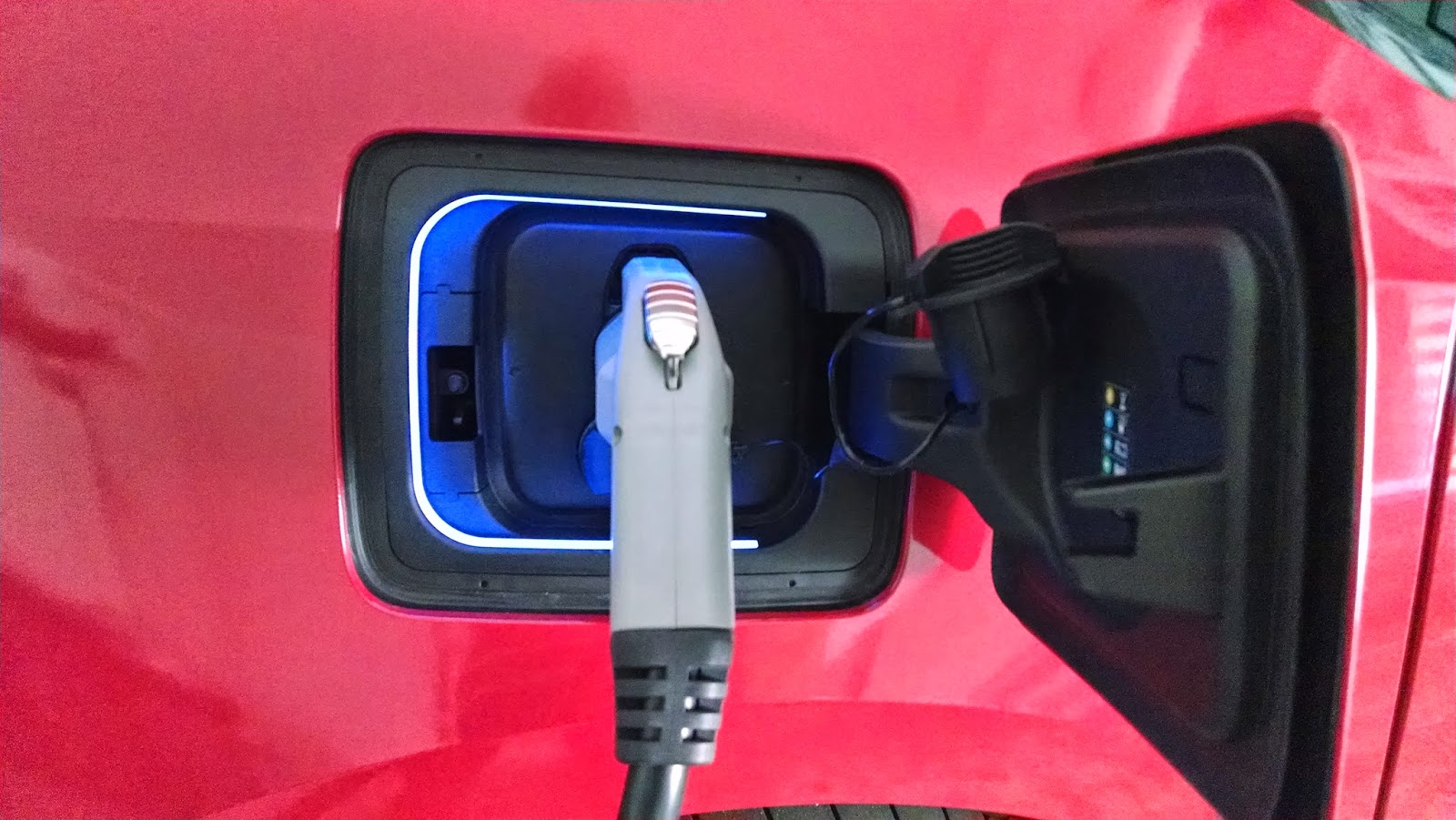
Did you know your i3 has a little tab to hold the charge port cover while it's charging? Bet you didn't!
Over at our Facebook i3 group we have complied a list of a few "Getting to know your i3" facts. I've put them together here to give new i3 owners a quick run-down of some of the things you may not find in the owners manual or be told by your dealer. The electric vehicle community has proven to be an invaluable resource for new LEAF, Volt and Tesla owners and I expect the same to happen with the i3. There is so much new ground to cover that the dealers simply can't provide all the information the customers need. That being said, they need to do better than what we have seen so far. If you have more tips and suggestions, please leave them in the comments section below and I may even add it to the post.
  • Your car is delivered with both charge rates purposely set to low. If you took delivery and are wondering why it's taking much longer to charge than you expected, this is the reason why. You need to go into the idrive settings > Charging and adjust to maximum setting.  Be aware that you can set these yourself and you might need lower settings depending on available current when charging.
  • Both seats will be likely be set up to the maximum height. Pull the lever to go down so your wrist can rest on the pad by the iDrive. The height of the armrest is also adjustable. Pull the tab on the leading edge up and you can set the height to your liking. The steering column not only adjusts up and down, but it also telescopes outward and is adjusted by the lever underneath the steering column.
  • Be mindful of the speed restriction setting in ECOPRO (75mph) and ECOPRO+ (55mph). You may need to adjust it. The car doesn't actually have a hard speed limit at those marks, but when you reach those speeds it temporarily holds the car from accelerating past them. If you want to go faster you really need to push the accelerator further to bypass the "soft" speed restriction. It is more of a gentle reminder to watch your speed than an actual speed limit.
  • The rear passengers can let themselves out by pulling the front seat headrest cable and pushing the seat forward to reach the door pull. 
  • To lay the rear seats flat, there is a fabric loop that you pull on the bottom corner of the seat back.
  • The front trunk is not water tight and under certain conditions water may spray up into it so don't put anything in there that can be ruined it if gets wet. If you need to do so, buy a watertight bag to store it in. Many people will keep their 120V occasional use EVSE up there. While it is indeed fine for outdoor use, I'd recommend storing it in a waterproof bag up there also so water doesn't pool up in the connector frequently.
  • There is an extra drink holder under the arm rest that you can insert at the front of the center console.You can also purchase an additional one and have three cup holders in the center console.
  • Check to make sure the AC and charging system is working before you leave the dealer; BMW disables both for shipping and the port or dealer needs to enable it before delivery. There were quite a few people in Europe that had this issue and now a few in the US are reporting  it also. It is evidently a 15 minute fix to enable the A/C at the dealer, provided your dealer has been trained on this and knows how to do it. Unfortunately not all dealers know this yet!
  • Download the BMW i Remote app from the iTunes store and have your CA register you for it.  More detail: There are two BMW apps , MY BMW Remote app and BMW Connected app. Which is correct?BMW i remote and BMW Connected (both for US) are correct. My BMW Remote was used for the ActiveE and is no longer applicable. Is the BMW Connected app used to monitor charging, precondition etc.. or is that a different app? The i Remote is for pre con and opening the doors etc. The Connected one does have some monitoring but it's mostly to run apps in the car (via a standard USB-to-phone cable rather than bluetooth) Go to iTunes App Store, put in search string “BMW” in search box, Filter for iPhone Apps only. (See photo of resulting apps, loaded as a separate file under the title "BMW iPhone Apps for i3")
  • Ask your insurance company for the Hybrid or Electric Vehicle discount.
  • Press the end of the turn signal stalk on the left side of the steering wheel to display the external temperature on the driver info screen.
  • Press the small button on the left side of the Driver Information Screen to reset the trip odometer displayed on that screen. The other trip computer is reset from within iDrive.
  • To play Pandora in the car, install apps from ConnectedDrive menu in idrive, then plug your phone into the USB cord and launch Pandora. The Pandora icon will appear in the radio menu. You can then use idrive to control Pandora in the center screen.
  • Download the BMW ConnectedDrive App to get many other features and apps like BMW Radio, Audible, Glympse, Amazon Cloud Player, Rhapsody, Stitcher, Aupeo, Facebook, Wiki Local and Twitter. You have to connect the USB cable to make it work.
  • When charging you can use the hook on the charge flap to hold the plastic "gas cap" cover. there is a small slot under the plug cover that aligns with it.  Or you can drape it over the top of the J1772 plug rather than letting it dangle in the wind against the paint.
  • Before you leave the dealership, put the car into reverse with no surrounding obstacles and verify that the sensors all work.
  • If you didn't order your car with the Technology Package, you may be missing the default code 606 navigation package.  BMW acknowledged that they was a problem and some cars didn't have the basic navigation installed:     

    "Today, we have identified a number of i3 Rex (Model 14iB) that have not been equipped with the standard Navigation Business system (Option 606). Your dealership has taken delivery of one or more of these vehicles. We are actively investigating and considering all avenues (option retrofit, option credit, vehicle reorder, etc.) for a dealer/consumer friendly resolution. We will have further updates as new information arrive.
    "
 Followed by:

 "We expect to know by Monday, June 2nd, the status of the retrofit for the missing Navigation Business system (option 606). The affected vehicles include all i3 Rex vehicles without ZTD (Technology + Driving Assistant Package) produced weeks 10 through 22 and half of week 23. Any vehicles that arrive at your dealership without Business Navigation can be retailed but you must disclose the missing option to your customer. The remaining affected vehicles will not be released until we have an update."
  • When you get home, press the BMW Assist button on the overhead console (open the button cover to reveal it) and speak with a representative to activate and set up your account. It takes about 5 minutes.
  •  
  • There seems to be some capability issues with the i3 and EVSE's made by Leviton. I know of three people that have reported their i3 won't charge on their Leviton unit. I have personally reported this to BMW engineering and contacted Leviton to help put them together on the issue so hopefully they will figure it out and correct the problem quickly.
  • Send a place to your car:  You can send a place in Google Maps to your car using the Send to Car feature. The first step is to add your car: Go to https://www.google.com/maps/sendtocar. Click Sign in and enter your account information. Click Add car or GPS device. Select “BMW" from the car type dropdown menu. Type in your account ID (email address) provided by your car manufacturer in “Account ID” field. Go to Google maps, look up a business or address and click the More link to send.  Once you send it from your pc google maps to the car you click my messages under bmw connected in the iDrive. Open the message and you will see the checkered flag to initiate navigation.
  • The radio will continue to play for a few minutes after you exit the vehicle. If this bothers you then press the Start/Stop button again with your foot off the brake pedal and it will shut off.
  • Check to make sure the tow bolt is located in the front trunk of the car or elsewhere. Page 195 of the owners manual says the tow fitting is located in the storage compartment under the hood. It should be wedged into the foam caddy for the tire inflation kit.
  • You can set your presets (above the AC 1 thru 8) to different functions to fit your own needs. I did this in the ActiveE, and to simplify the process, hopefully this will make sense.  Go into the idrive and select your sub menu, example click on vehicle info, then choose trip computer.  Don't select trip computer, but turn the idrive controller over it until the check mark shows.  Then select the preset you want, and press and hold until it confirms.  it should then show up on the top of the screen with the rest of the presets in blue.  You can absolutely go into the sub menus and select options to save on some things, but not on others.  Play with it.  I also selected all of my radio/satellite presets and saved the presets as a preset.  When you leave the radio is preset mode, you can then scroll thru the radio presets on the steering wheel while in other menus.  
  • Download the following apps to locate charging stations and set up the associated accounts. It's good to have a few of them as none seem to have all the charging stations available listed: Chargepoint, Greenlots, Plugshare, Recargo, Blink, Carstations.


Do you have any more i3 delivery quick tips and suggestions? If so, please help out the i3 community and leave them in the comment section!

Handwriting with Tears; Don't cry for cursive.

There's a handwriting system that my son's teachers use called "Handwriting without Tears." They have an app (that I don't really like) and all kinds of classroom curricula (which teachers seem to like). I always laugh a little at the name, because for me, handwriting caused tears.

As an adult, I've come to terms with my quirky brain and dyslexia and my general trouble with spatial relations. I have the fine motor control to play instruments, but something about trying to form shapes and letters on pages was and is very difficult for me. I can do basic clear printing with intense concentration.

Throughout elementary school, I was criticized for my handwriting. I remember my mother once going through weeks or months of papers, trying to figure out how to improve my handwriting (a very sharp pencil was one suggestion). It wasn't just my dyslexia, I was also sloppy, though I've come to see certain kinds of sloppiness as a coping mechanism for my strange brain (i.e. if I intentionally screw up, then I don't have to wonder why my brain doesn't work right). At any rate, I hated writing and my handwriting is a disaster.

When I was in 8th grade, we got a personal computer with an early word processing program. It changed my life. It divorced the act of writing from the act of forming letters with my hands. A typewriter could have done the same, but using a typewriter was not normal for 7th graders, whereas the new age of computers changed things. As I am now steeped in the world of assistive technology for my son, I think back on the computer and the word processing program as my own form of assistive tech. Anyway, as Sara Hendren regularly argues, all technology is assistive technology, from motorized wheelchairs to shoes to hearing aids to glasses.

I'm writing this in the wake of many friends sharing a New York Times piece lamenting the end of handwriting teaching.
Psychologists and neuroscientists say it is far too soon to declare handwriting a relic of the past. New evidence suggests that the links between handwriting and broader educational development run deep.
Children not only learn to read more quickly when they first learn to write by hand, but they also remain better able to generate ideas and retain information. In other words, it’s not just what we write that matters — but how.
“When we write, a unique neural circuit is automatically activated,” said Stanislas Dehaene, a psychologist at the Collège de France in Paris. “There is a core recognition of the gesture in the written word, a sort of recognition by mental simulation in your brain.
A 2012 study led by Karin James, a psychologist at Indiana University, lent support to that view. Children who had not yet learned to read and write were presented with a letter or a shape on an index card and asked to reproduce it in one of three ways: trace the image on a page with a dotted outline, draw it on a blank white sheet, or type it on a computer. They were then placed in a brain scanner and shown the image again.
The researchers found that the initial duplication process mattered a great deal. When children had drawn a letter freehand, they exhibited increased activity in three areas of the brain that are activated in adults when they read and write: the left fusiform gyrus, the inferior frontal gyrus and the posterior parietal cortex.
Let's assume that all of this is correct. The value here isn't handwriting, but the neurological processes that accompany handwriting.

Handwriting is going away. Not scribbling quick notes on pads, but the era of formal cursive handwriting, the very form of handwriting that seems to most provide these neurological benefits, is coming to an end.

The solution is not to lament the loss of cursive and not to force kids to learn cursive anyway, despite its lack of utility, but rather to find other means to stimulate related neurological processes. Is it art? Is it rock climbing? Is it baking bread? I don't know, but let's not confuse means with outcome.

Update: On ableism and handwriting, please read this wonderful post from my friend Rick Godden.

Disability and Happiness

I often write against a generalized "happy happy" language that permeates certain aspects of disability discourse, particularly in the Down syndrome community. Our community pushes a kind of "life is great" mentality, driven especially by the abortion issue, and I strongly support drives to fight the stereotypes of horror and worthlessness. The joys in our life with Nico, my son, are intensified by the hard work and great challenges. The joys are many. But I also want to make sure we have room for challenges to be challenging, sorrow to be sad, for mourning, grief, stress, anxiety, and pain.

And then, having carved out discursive space for things to be hard, I try to make the turn back towards happy, the kind of real joy that you only know when you acknowledge its mirror.

In BBC magazine, Tom Shakespeare, a sociologist born with restrictive growth, writes about happiness and disability. He writes:
Have you ever thought to yourself: "I'd rather be dead than disabled?" It's not an unusual reflection. Disability, in everyday thought, is associated with failure, with dependency and with not being able to do things. We feel sorry for disabled people, because we imagine it must be miserable to be disabled.
But in fact we're wrong. It's sometimes called the "disability paradox". Surveys reveal people with disabilities consistently report a quality of life as good as, or sometimes even better than, that of non-disabled people.
This is based on data, some of which he links to, and you can follow the links. He then explores possible permutations of the data, criticisms of it, and offers his own story of progressive disability (an injury). Please read the whole piece.

Towards the end, he offers the following:
This highlights the importance of the environment in determining the happiness of disabled people. As in most areas of life, it's structural factors that make the real difference. Participation, not impairment is key. Do access barriers stop you going to school with your friends? Do you have a job? Does society meet the extra costs of having an impairment through a welfare system which is fair and non-stigmatising? Do you face hostility and hate crime? Unfortunately, in most of these respects the situation for disabled people has been getting worse, not better, in recent years. According to the Centre for Welfare Reform, this government's spending cuts have had a hugely disproportionate impact on the lives of disabled people in poverty.
Policy. Work. Money. School. Community. These are the factors that shape happiness. And they shape it for all of us.
And remember: Mere existence entails problems. Hamlet, listing reasons why death is to be preferred, highlights "the thousand natural shocks that flesh is heir to". To be born is to be vulnerable, to fall prey to disease and suffering, and ultimately to die. Sometimes, the part of life that is difficult brings other benefits, such as a sense of perspective or true value that people who lead easier lives can miss out on. If we always remembered this, perhaps we would turn out to be more accepting of disability and less prejudiced against disabled people.
Perhaps. Let's hope. This is why I, and the disability studies folks who educate me, emphasize the "temporarily able bodied" construction as a DS 101 core concept. Disability waits for all of us, but the thought need not drive away whatever happiness we are able to find.
 

Sunday Roundup: Four Strong Essays

    Last week I was working on footnotes, so I didn't plan any pieces. Naturally, I wrote four essays that are some of the most-read pieces in the history of the blog.

    In reaction to the UCSB shooting, I wrote a piece on Elliot Rodger and Intersectionality. I coined something called "The shrug," in which either as a silencing tactic or out of genuine bewilderment, people say, "it's too complicated," and shrug. Intersectionality was developed as a concept in order to respond to events like this (and less tragic ones too).

And then I watched the meltdown of the internet's current most famous male feminist, Charles Clymer (no link given on purpose). He joins a long line of male feminists who couldn't take criticism and blew it. So I wrote, Talking While Privileged - A continuing series. These are my 5 rules:
  1. Don't talk at all. Listen for awhile. 
  2. It's not about you (it's about the people with less privilege)
  3. It's sometimes about you (i.e. it's very important that men talk to men about rape)
  4. It's always about them, so amplify their voices.
  5. When you speak, don't expect gratitude and take criticism graciously.
Switching topics, at the bus stop, a girl who wanted to help my son said, "It's so sad when people have special needs."I did my best to answer her, and then talked about all the ways my son is and isn't included. It's not so sad, but it is a lot of work, and we need allies.

Finally, a mother wrote me after her son was hurt by a boy with Down syndrome in a play area. She was upset, felt that people were shaming her, but felt that the boy with Down syndrome was unable to be held accountable for his actions. What should/could she do? I answered, to the best of my ability

Between, you and me, that answer needs to be 500 words shorter. I'll work on it, as it's a new topic but one I think it going to come back around more often.

In other news, I'm writing a book and have some columns to write next week, so we'll see how much I get to blog. I hope to have news on the new book by the end of the month (depending on when the next round of copyedits come in).